
Carving Time: The Knives That Shaped My Pandemic Hobby
Whittling is about more than creativity—it's about mastering the right knife for every task

Like almost everyone around me, I discovered a wealth of new hobbies early in the pandemic. Mine were pretty straightforward. I gardened, picked up a few model sets and volunteered here and there. My oldest daughter took up sketching. My youngest wrote stories.
My neighbour shellacked her entire fireplace with pennies.
It was a weird time.
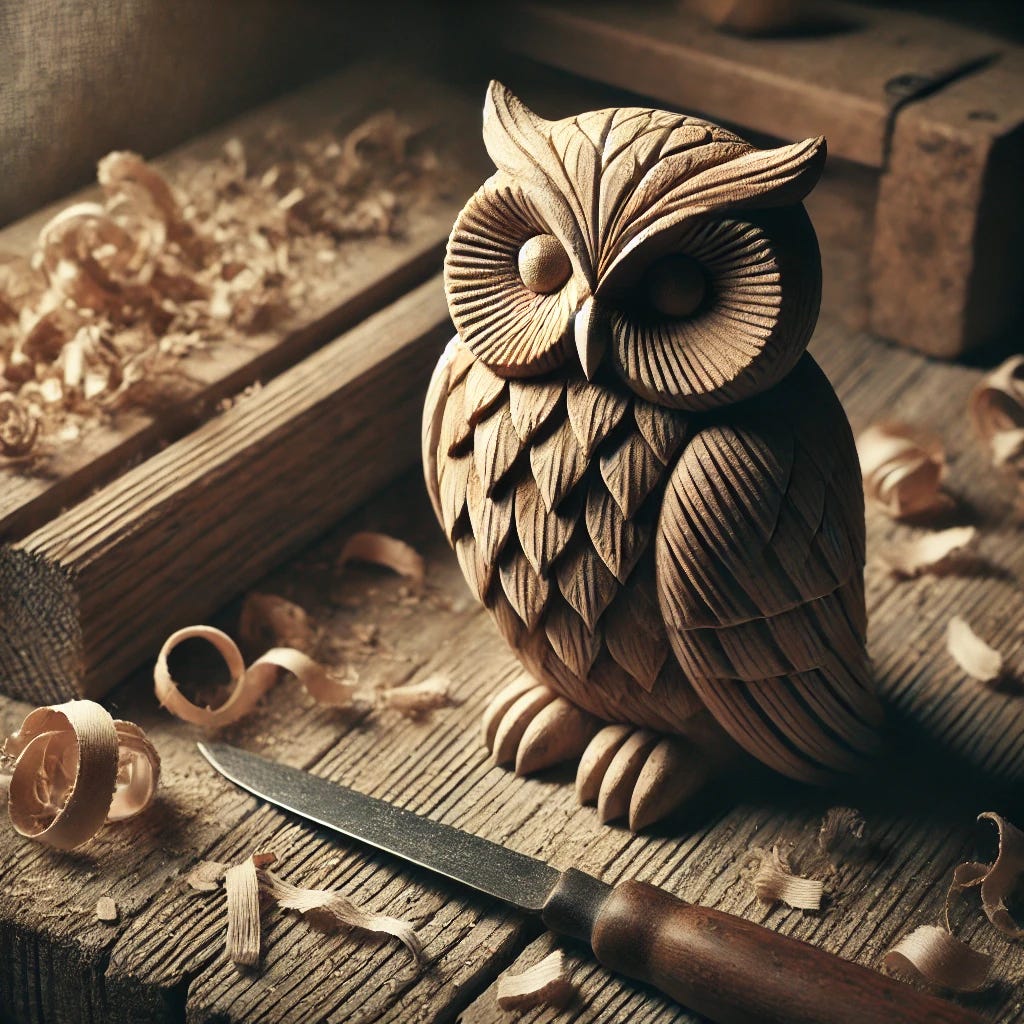
But my favourite, and the one I bring up when people ask me what I did during that first isolated six months or so, was whittling. Yes whittling, like with a block of basswood, a razor-sharp blade, and a whole bunch of bandages on deck.
It started when I visited Lee Valley Tools on a recommendation from a friend who ran a woodworking shop. My virgin eyes were opened to a world I didn’t know existed—a world of gougers, scrapers, and tools with grips that were made for my hands.
That day, I purchased a folding pocket knife, compact enough to slip into my pocket, with a two-inch roughing blade and a one-and-a-half-inch detail blade. Ol’ Sharpie, I called her, and she’s my number one. She glides smoothly and only bites when I ask for it—usually when I get cocky and dance too close to her edge.
But sometimes a man needs options.
Whittling is about more than creativity; it’s about control, and the shape of the knife can make all the difference. Some are great for digging out chunks while others are all about precision. So don’t tell Sharpie, but here are a few other blades I’ve played with over the last few years:
Straight Blade – The all-purpose workhorse
Most carvers use a straight-edged whittling knife. It’s versatile enough to handle rough shaping and some detail work, and its straight edge gives you control over long, smooth cuts. It’s great for beginners, too.
Hook Knife – The curved specialist
For spoons, bowls, or anything with concave surfaces. The curved blade lets you scoop without gouging or tearing the grain. It's a must-have if you plan to venture beyond flat surfaces.
Detail Knife – The precision master
When it’s time to carve faces, feathers, or intricate textures, a detail knife is what you need. These knives have shorter, narrower blades for precise cuts.
Chisel Knife – The miniature carpenter
This is literally a tiny woodworking chisel, great for clean, straight cuts. It’s less common in basic whittling but useful for adding depth and sharp edges to a design.
Sloyd Knife – The traditional carver
A sloyd knife has a slightly curved, long, and narrow blade for both roughing out and fine work. It can handle big shaping cuts and clean-up details with the tip.
Some whittlers swear by one knife for every piece. One day, I hope to reach that level of zen, but until then, I’ll rely on the right tool for the job.
Also, here’s a playlist with some of my go-to whittling albums. Enjoy!